The Difference Between PSL1 and PSL2 That Actually Matters on a Project
I’ve seen the PSL1 vs PSL2 question come up at the procurement stage more times than I can count, usually framed as a cost question: PSL2 costs more, so is it worth it? The honest answer is that it depends on what you’re building, where you’re building it, and what the fluid in the pipe is going to do to the steel over time. But before you can answer that, you need to understand what PSL actually controls — and what it doesn’t.
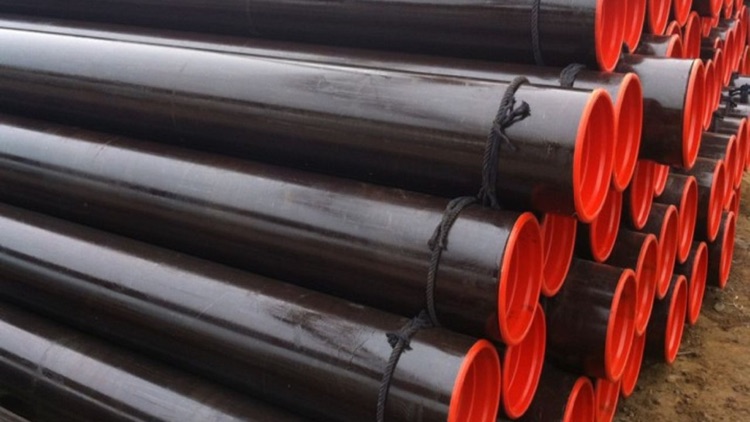
PSL stands for Product Specification Level. It’s a quality tier within the API 5L standard for line pipe, and the two levels set different requirements for how the pipe is manufactured, tested, and certified. They don’t control the steel grade — that’s a separate designation (X42, X52, X65, and so on, which define yield and tensile strength). PSL and grade are independent variables that combine when you specify pipe. You can buy X52 PSL1 or X52 PSL2, and they’ll both meet the X52 strength requirements. What differs is everything that surrounds the mechanical properties.
What PSL2 Adds Over PSL1
The core additions in PSL2 fall into three areas: chemistry limits, toughness testing, and non-destructive examination.
On chemistry, PSL2 imposes maximum carbon equivalent (CE) values. Carbon equivalent is a formula that estimates how a steel’s composition affects its weldability and susceptibility to hydrogen cracking in the heat-affected zone. PSL1 doesn’t specify a CE limit — it only controls individual element limits like carbon, manganese, and sulfur. PSL2 adds a CE ceiling, which means the mill has to formulate the heat of steel within a tighter window to ensure predictable weld performance. For field welding in remote or cold conditions, this matters: a high CE pipe can technically meet PSL1 requirements while being significantly harder to weld without cracking.
Toughness testing is the other major addition. PSL2 requires Charpy V-notch (CVN) impact testing to verify that the pipe has adequate fracture toughness at a specified test temperature. PSL1 doesn’t require CVN testing at all — it’s optional, and if it’s performed, the results don’t have to meet any acceptance criteria unless you’ve specified supplemental requirements. PSL2 makes CVN mandatory and ties it to actual acceptance limits.
For the hydrostatic test, PSL2 requires a higher mill test pressure than PSL1 for the same grade and wall thickness. This doesn’t mean PSL2 pipe is stronger — the operating pressure limits are set by the same code equations — but the higher test pressure provides greater confidence that the pipe will hold at operating conditions without defects that PSL1’s lower test pressure might not have caught.
Non-destructive examination requirements are also more extensive under PSL2. ERW seam welds receive more comprehensive ultrasonic examination. End-area inspection is mandatory. The result is a pipe with a more thoroughly documented weld seam.
When PSL1 Is Still the Right Answer
PSL1 is not a lesser product — it’s a product designed for conditions where the additional PSL2 requirements don’t change the engineering outcome.
Short-distance gathering lines, compressed air systems, water transmission, and low-pressure process piping in non-aggressive environments are all cases where PSL1 vs PSL2 is not a meaningful performance distinction. If the design temperature is well above any ductile-to-brittle transition concern, if the service fluid isn’t corrosive to weld heat-affected zones, and if the welding procedure is qualified for the chemistry range that PSL1 allows, the extra cost of PSL2 buys you documentation and testing overhead, not necessarily better field performance.
The economics also shift based on pipe size and wall thickness. PSL2 adds cost in two ways: the additional testing and examination at the mill, and the tighter chemistry specifications that limit which heats of steel are eligible. For large-order projects, mill negotiations can narrow the price gap. For small quantities, the difference per ton is more pronounced.
Where PSL2 Is Worth It
Low-temperature applications are the clearest case. If the pipeline operates in an environment where the steel will see temperatures below about minus 20 degrees Celsius — Arctic installations, offshore deepwater risers, pipelines through permafrost zones — the CVN requirement in PSL2 directly addresses the risk of brittle fracture propagation. PSL1 pipe may meet the ductile-to-brittle transition requirements if you specify CVN testing as a supplemental requirement, but PSL2 makes that testing mandatory by default.
High-pressure transmission lines are another case. Long-distance natural gas and liquid petroleum pipelines operating at high design factors have regulatory requirements in many jurisdictions that effectively mandate PSL2 as a minimum. In the US, ASME B31.8 and the PHMSA regulations for Class 3 and Class 4 locations often require the enhanced testing and documentation that PSL2 provides.
Sour service — pipelines carrying hydrogen sulfide — sits in a different category. Sulfide stress cracking (SSC) resistance is determined primarily by hardness, microstructure, and chemistry, and PSL2’s CE limits provide better starting control of the parameters that govern SSC susceptibility. API 5L PSL2 is the baseline specification that NACE MR0175/ISO 15156 references when addressing line pipe in sour service environments.
The Procurement Implication
Specifying PSL2 when you need PSL1 wastes money and can extend lead time if the pipe requires mill ordering to meet the tighter chemistry requirements. Specifying PSL1 when the project conditions warrant PSL2 creates a risk that may not surface until the pipeline is operating — a brittle fracture in cold conditions, weld cracking in the heat-affected zone, or a regulatory audit that finds the pipe documentation doesn’t meet the code requirement for the class location.
The PSL decision should come from the design engineer after reviewing the design temperature, service fluid, regulatory classification, and weld procedure requirements — not from a purchasing agent trying to minimize unit cost.